Hijama cupping therapy is sunnah Rasool, a miracle remedy, a natural cure, the fastest detox to cure general illnesses and removes toxic material from the bloodstream. Hijama benefits everyone. Hijama is wet cupping therapy.
Studies have shown that regular face cupping can reduce fine lines and wrinkles. Facial cupping is a traditional therapy that uses tiny suction cups to stimulate the skin and underlying tissues. It is believed to improve circulation, boost collagen production, and promote lymphatic drainage, which helps reduce fine lines and wrinkles. Causes Of Fine Lines & Wrinkles Fine lines and wrinkles are a natural part of aging, but several factors can contribute to their formation. Aging Sun exposure Repeated facial expressions Environmental factors like pollution Smoking Poor dietary habits Lack of sleep Depression and stress Genetics Hormonal changes Dehydration Loss of fat in the face as a result of any crash diet How Face Cupping Aids The Reduction Of Wrinkles 1. Improved Circulation: When the suction cups are applied to the skin, they create a vacuum effect, pulling the skin upwards. This movement increases blood flow to the treated areas. The enhanced circulation brings more...
Get link
Facebook
X
Pinterest
Email
Other Apps
What is TMJ, Causes, Symptoms, and Hijama Cupping Therapy
Get link
Facebook
X
Pinterest
Email
Other Apps
TMJ refers to the temporomandibular joint, which connects our lower jaw (mandible) to the skull, just in front of each ear.
This joint is used for chewing, talking, yawning, and swallowing, so even small issues can cause noticeable discomfort.
TMJ problems (more accurately called TMD — temporomandibular disorders) are caused by a combination of factors, not just one single reason.
Common Causes
Teeth grinding or clenching. Constant pressure on the jaw joint and muscles is often linked to stress or sleep issues.
Stress and anxiety Stress causes jaw muscle tension and clenching, which strains the TMJ over time.
Jaw or facial injury Trauma from accidents, falls, or sports can damage the joint or surrounding muscles.
Poor posture Forward head posture and long screen time can strain neck and jaw muscles, affecting the TMJ.
Arthritis Osteoarthritis or rheumatoid arthritis can damage the TMJ joint.
Disc displacement The cushioning disc inside the TMJ can become displaced, causing clicking, popping, or locking.
Misaligned bite or teeth issues Uneven bite or missing teeth can alter jaw movement and joint balance.
Excessive jaw use Chewing gum frequently, nail-biting, or wide yawning can stress the joint.
Common Symptoms
TMJ symptoms can vary from mild to severe and may include:
Jaw pain or tenderness
Pain in front of the ears
Clicking, popping, or grinding sounds when opening or closing the mouth
Difficulty or pain while chewing
Jaw locking (open or closed position)
Headaches or migraines
Neck and shoulder pain
Facial pain
Ear symptoms (earache, fullness, ringing) without infection
Limited mouth opening
Does Hijama Cupping Therapy Help with TMJ?
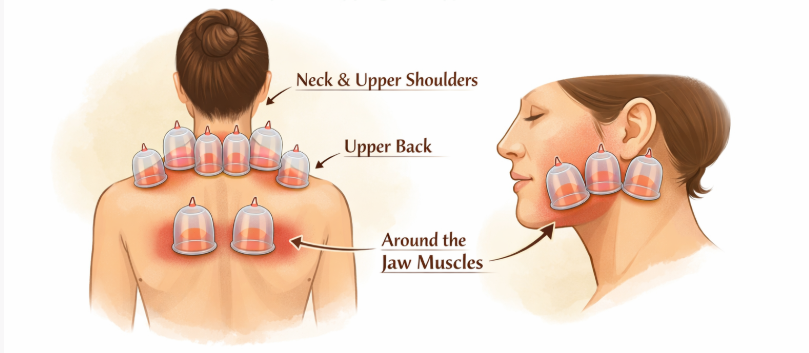
Hijama does not cure TMJ, but it may help relieve symptoms for some people. Practitioners focus on the neck, shoulders, back, and jaw muscles. For facial areas, very gentle pressure is essential, and treatment should only be done by trained professionals.
Common Hijama Areas Used
Neck and upper shoulders
Upper back
Around the jaw muscles
TMJ, Stress, and the Role of Hijama Cupping Therapy
TMJ and stress are closely connected. When a person is under stress, the body often responds by tightening muscles — especially in the jaw, neck, and shoulders. Many people unconsciously clench or grind their teeth (bruxism) during stress or sleep, which places repeated pressure on the temporomandibular joint and surrounding muscles. Over time, this tension can lead to jaw pain, tightness, clicking, headaches, and limited mouth movement.
Stress also increases muscle fatigue and inflammation, making TMJ symptoms feel worse and slower to resolve if the root tension is not addressed.
How Hijama Help
It helps relax tight jaw, neck, and shoulder muscles
It supports better blood circulation to tense areas
It may reduce stress-related muscle stiffness
It encourages overall relaxation, which can reduce jaw clenching
Stress can play a major role in TMJ by creating chronic muscle tension and jaw clenching. Hijama may help ease muscle tightness and stress-related discomfort, but lasting relief comes from combining supportive therapies with stress reduction and proper care.
Most Common Medical Treatments for TMJ
Treatment depends on the cause and severity:
Conservative
Jaw rest and soft diet
Stress management
Pain relievers or anti-inflammatory medications (as advised by a doctor)
Muscle relaxants (short-term, if prescribed)
Physical therapy
Jaw exercises
freepik.com
Dental Treatments
Night guards or splints (for teeth grinding)
Bite correction (in selected cases)
Best Home Remedies for TMJ Relief
These are often very effective for mild to moderate TMJ issues:
1. Jaw Rest
Avoid hard, chewy, or sticky foods
Cut food into small pieces
Avoid wide yawning
2. Warm or Cold Compress
Warm compress: relaxes muscles
Cold compress: reduces inflammation (10–15 minutes, 1–2 times daily)
The seven-organ Hijama points are essential in maintaining the body’s natural healing process. The seven-organ Hijama points hold significant importance in cupping therapy due to their direct and indirect connection to vital internal organs. These specific points are strategically chosen to stimulate detoxification, regulate organ function, and restore balance in the body. Each of these points corresponds to a major organ such as the liver, lungs, kidneys, heart, stomach, bladder, and intestines. Locations of these Hijama Points Hijama Point no 1: Top of the spine and back of the neck on the shoulder blade Hijama Point no 4: located on the upper back, on the right side of the shoulder blade. Hijama point no 5: mirror of point 4, on the left side of the shoulder blade. Hijama point no 22: located in the middle of the back, on the right side of the spine. Hijama point no 23: mirror of point 22, on the left side of the spine. Hijama point no 24: located in the lower back/pelvis, fur...
Patients with blood thinner medications can perform Hijama cupping therapy with a few precautions. What Are Blood Thinner? Blood thinners can be lifesaving medicines that prevent blood from composing bigger clots. These medicines can not dissolve huge clots that are already formed but they stop the blood from making more bigger clots. Blood should be thin enough to flow smoothly through the veins and arteries. Blood thinners should be consumed as directed, taking less medicine won’t be as effective as required and too much can lead to heavy bleeding in case of injury. Two Categories Of Blood Thinner Medicine There are two categories of blood thinners: anticoagulants that slow the formatting of clots from getting bigger and antiplatelets that keep the proteins from sticking in the blood and aid the blood from clotting. Why Doctors Recommend Blood Thinners The doctors prescribe these medicines to those people who have: Risk of heart attack or stroke Irregula...
Proper hydration around Hijama is crucial for supporting the body’s healing processes and preventing side effects like fatigue. Photo by Kobby Mendez on Unsplash Let’s discuss drink choices before and after Hijama, based on traditional Islamic medicine (Tibb), modern physiological understanding, and practitioner consensus. Hydration is Key The therapy involves the removal of a small amount of “static” blood. Being well-hydrated ensures your blood volume is adequate and your blood isn’t too viscous, making the process smoother and more effective. BEFORE Hijama (24–48 Hours Prior) Best Drink Choices: 1. Plain, Room-Temperature Water: The absolute best. Sip consistently throughout the days before your session. Aim for 2–3 litres. 2. Electrolyte-Infused Water (Natural): Add a pinch of high-quality sea salt and a slice of lemon to your water. This helps with fluid retention and cellular hydration. 3. Herbal Teas (Mild & Non-Diuretic): Ginger Tea: Warming, promotes c...




Comments
Post a Comment